Snow leopards live high in the mountains, where it’s freezing cold, windy, and snowy for much of the year. You might wonder—how do they survive in such extreme places?
That’s the big question we’ll explore: What adaptations do snow leopards have for surviving in cold climates? In this article, you’ll learn how their thick winter coat keeps them warm, how their wide paws work like natural snowshoes, and why their short ears and big nose help save body heat.
We’ll also explain how they breathe cold air, move on steep rocky slopes, and even pick the best places to stay warm. Ready to discover how these mountain predators are built for the cold? Let’s dive in.
How Snow Leopards Survive Extreme Cold in the Mountains

High in the icy ridges of Central Asia, snow leopards live in one of the world’s most unforgiving places. Their cold mountain habitat is filled with snow, wind, and thin air. To survive here, snow leopards depend on amazing physical traits that keep them warm and hidden.
Their thick fur, unique color patterns, and smart energy-saving designs help them face freezing temperatures and hunt without being seen. These natural features are not just helpful—they’re essential for life at high altitudes. Let’s take a closer look at how their bodies work like built-in winter gear.
Thick Fur and Undercoat for Body Heat Retention
Have you ever worn a winter coat with a fuzzy lining that keeps you warm? The snow leopard’s body works just like that—only better.
Their fur has two layers: a soft, wool-like undercoat and a top layer of longer guard hairs. The undercoat traps warm air close to the skin, which keeps body heat from escaping. This is like having a built-in blanket wrapped around their whole body.
During the coldest months, their winter coat gets even thicker. Some hair strands can grow up to five inches long. Their entire body, including their belly, legs, and even the underside of their paws, is covered in fur. This helps them stay warm even when lying on snow or walking over ice. Their dense coat also helps them sleep in the open without freezing. It’s like carrying your own sleeping bag everywhere.
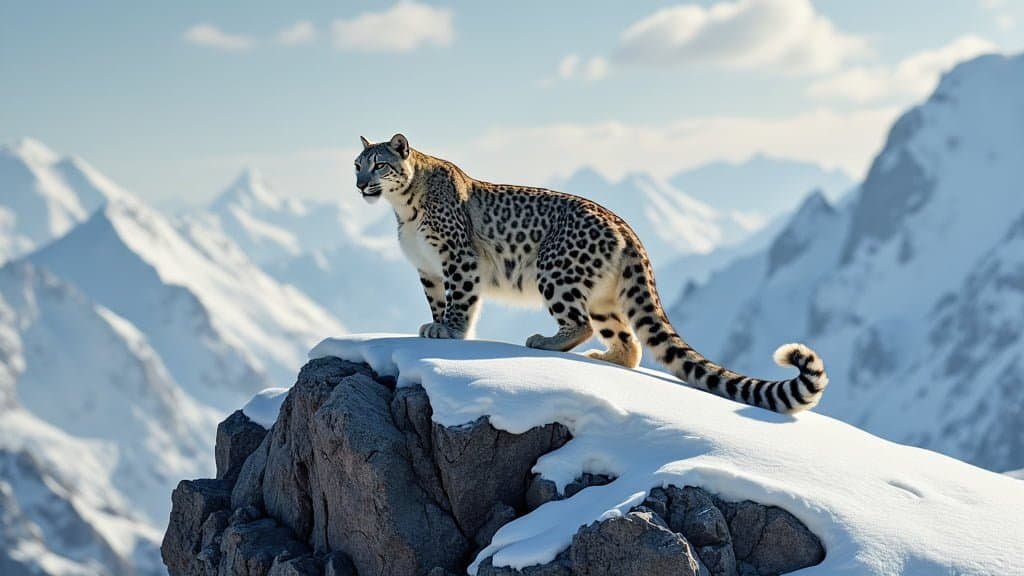
The fur color also matters. Snow leopards have pale gray or cream-colored coats with dark spots and rosettes. These markings help them blend into rocky snowy cliffs.
Camouflage isn’t just for hiding—it helps them sneak up on prey and stay safe. That way, they avoid long chases that waste energy, which is super important in a freezing world where energy is hard to get.
If you’re curious, the Snow Leopard Trust explains more about their coat and other body features that help in the cold.
Camouflage Patterns That Help Preserve Energy
Now picture a snow leopard hunting on a snowy slope. Its coat isn’t just warm—it helps it vanish. The grayish-white color of its fur, combined with those dark rosettes, acts like natural camouflage. Blending in with rocks and snow makes it almost invisible to prey like blue sheep or mountain goats.
But why is camouflage so important in cold places? Because energy is precious. Hunting in the mountains uses a lot of effort. If the snow leopard had to chase prey every time, it would burn too much energy and might not catch anything. But if it stays hidden and gets close before pouncing, it has a better chance of success.
Camouflage helps reduce movement. Less movement means less heat loss and fewer calories burned. That’s especially helpful in high-altitude areas where food is hard to find. So, the snow leopard’s fur pattern doesn’t just protect it from being seen—it helps save warmth and energy too.
These patterns also work in both snowy winters and rocky summers. That way, the leopard is protected all year round without needing to change color like some other animals do. Their fur is nature’s perfect mix of warmth and disguise.
Specialized Body Parts for Snow and Ice Mobility

Living in cold, snowy mountains isn’t just about staying warm—it’s about moving safely too. Snow leopards don’t live on flat ground. They climb, leap, and walk across steep cliffs, slippery rocks, and deep snow.
To do that, their body is built with special parts that act like snow gear. Their wide paws, strong tail, and compact ears help them handle tough terrain without slipping or getting too cold. Let’s explore how each of these unique features works.
Large Furry Paws That Work Like Natural Snowshoes
Ever worn snowshoes to walk on deep snow? Snow leopards don’t need to. Their paws do the job naturally. Each paw is wide and rounded, which spreads their weight over a bigger surface. This keeps them from sinking into soft snow. It’s like walking with built-in floatation devices on their feet.
The bottom of their paws is also covered in thick fur. That layer acts like insulation, protecting their footpads from freezing surfaces. It also helps with traction. On icy rocks, this fur gives them a better grip so they don’t slip. Scientists who studied their paw structure found that the snow leopard’s muscle and bone design supports quiet and powerful movement across uneven terrain.
This quiet step matters. When stalking prey in the mountains, making too much noise could ruin the hunt. So those big, furry feet don’t just help in snow—they help them sneak up on animals without being heard. This saves time, heat, and energy. You can learn more about their unique foot design in this overview from Potter Park Zoo.
Tail Functions for Balance and Cold Protection
Have you ever seen a snow leopard leap across a rocky ledge? One of their best tools for that is their long, thick tail. This tail can be nearly as long as the rest of their body. It acts like a balancing pole when they jump across gaps or walk on narrow cliffs. In the slippery mountains, balance is life-saving.
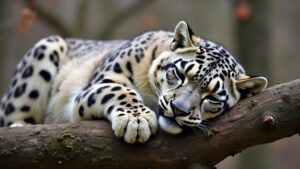
But that’s not the tail’s only job. It’s also packed with fur and muscle, making it like a cozy scarf. When the snow leopard curls up to rest or sleep, it wraps its tail around its body or face. This keeps its nose and paws warm and blocks the wind. In a place where temperatures can drop far below zero, that added warmth makes a big difference.
Some researchers also think the tail stores fat, which could provide extra energy in hard times. Since food in these mountains isn’t always easy to find, having backup fuel inside the tail might help the snow leopard survive when prey is scarce. That’s why the tail isn’t just for balance—it’s a multi-purpose tool for cold survival.
Compact Ears and Broad Nose That Prevent Heat Loss
Snow leopards have small, rounded ears that sit close to their head. Why does that matter? Because small ears lose less heat. In freezing climates, any part of the body that sticks out is at risk of losing warmth. That’s why these cats don’t have big floppy ears like a fennec fox in the desert. Their ears are designed to keep heat in.
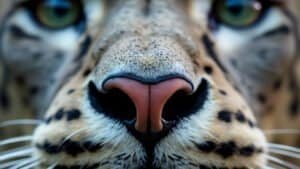
Their nose is wide and their nasal passages are large. This helps warm the cold mountain air before it enters their lungs. Breathing in freezing air all day can be dangerous if it’s not warmed up first. The shape of their skull and sinuses is built to fix that. This means they can breathe safely even at high altitudes where the air is both cold and thin.
These features help the snow leopard keep its body temperature stable. That’s especially important when they’re climbing or resting at elevations over 15,000 feet. Some scientists have even compared their breathing system to a built-in heater. You can read more about these body features in this HowStuffWorks guide to snow leopards.
Breathing and Moving in Thin, Cold Mountain Air

Cold weather is one thing. Cold weather combined with thin air and steep cliffs is another. Snow leopards don’t just face cold—they live at high altitudes where oxygen is low and the terrain is harsh.
To survive here, they need more than warm fur. They need a body that can breathe in thin air and move without wasting energy. Their lungs, nose, and skeleton all work together to make this possible. Let’s see how.
Nasal and Lung Features for Cold Air Respiration
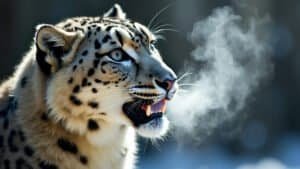
Have you ever taken a deep breath on a freezing day and felt your nose sting? Snow leopards avoid that problem. Their wide nasal passages help warm cold air before it reaches their lungs. This protects their respiratory system from damage caused by icy air. Their skull shape and sinuses give them a built-in air warmer.
Unlike some animals that live in high places, snow leopards don’t have strong genetic changes for oxygen use. Instead, they rely on smart body design and efficient breathing. Their large chest and nose work together to make each breath count. This helps them survive in mountains over 16,000 feet high.
Even though the air is thin, they don’t overheat while moving. Their thick fur keeps them warm, while their nose keeps their lungs safe. This balance helps them save energy and stay active in places where few animals can breathe well. Some researchers are still studying how these cats handle altitude, but one thing is clear: their breathing system is built for life on snowy cliffs.
Skeletal Strength That Supports Cold Terrain Travel
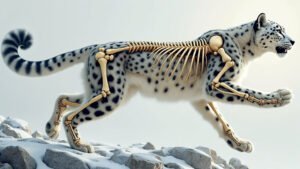
Have you ever tried hiking up a rocky hill? Imagine doing that every day, in snow, while hunting for food. Snow leopards can leap up to 30 feet in a single jump. That’s thanks to their powerful bones and strong muscles.
Their front legs are built for grabbing and holding prey, while their long back legs give them the power to leap. Their spine is flexible, which helps them twist and turn quickly on rocky slopes. This movement keeps them from falling and helps them chase prey in tough terrain.
But how does this help in cold weather? In freezing places, every move costs energy. If an animal wastes too much energy, it can freeze or starve. Snow leopards move in ways that use less energy and avoid injury. Their balance, strength, and agility let them get close to prey without long chases. That means more energy saved for warmth.
Also, because their paws and limbs are shaped for soft snow and steep rocks, they can travel long distances to find food. This is important in winter when prey is hard to find. Their bones don’t just hold them up—they help them survive.
Behavior and Shelter That Help Conserve Heat

Staying warm in freezing weather isn’t just about having the right body parts. It’s also about making smart choices. Snow leopards know how to use their environment to their advantage. From picking warm places to rest, to changing when they’re active, their behaviors help save heat and energy. These daily habits are just as important as fur and paws when it comes to surviving the cold.
How Snow Leopards Use Rocky Dens for Warmth
Have you ever looked for shelter when the wind is blowing hard? Snow leopards do the same thing. They often rest or sleep in rocky caves, crevices, or ledges that block cold winds and snow. These spots act like natural hideouts that trap body heat and protect them from the elements.
Mothers raising cubs choose the warmest and safest places they can find. They sometimes line the den floor with fur to make it softer and warmer for the cubs. Since young cubs can’t handle the cold as well as adults, this cozy setup is key to their survival.
Even in summer, these dens offer shade and protection from sudden weather changes in the mountains. Snow leopards are experts at picking the best place to rest. A good den means they don’t have to waste energy trying to stay warm or find new shelter all the time.
These choices might seem small, but they play a big role in staying warm and safe. For more examples of how snow leopards use shelter wisely, this detailed article from the Snow Leopard Trust offers great insights.
Seasonal Behavior Shifts That Reduce Energy Waste
Imagine if you could change your schedule just to stay warmer. Snow leopards do that all the time. In colder months, they may adjust their behavior to match the weather. They often become more active during dawn and dusk—times when it’s not too cold but prey is still moving.
They also move to slightly lower elevations in winter where it’s not as windy or icy. These lower spots may have more prey too. This shift helps them avoid using up energy climbing or searching in harsh, empty areas.
Snow leopards also curl up tightly when they sleep. They wrap their long, fluffy tail around their body like a thick scarf. This pose helps hold in heat and protect their face and paws from the cold. They may stay still for hours, especially during storms, to avoid losing body heat.
Every one of these actions—changing locations, adjusting activity, wrapping their tail—helps them survive. In cold mountain regions, saving energy is as important as finding food. These smart habits make the snow leopard not just a tough animal, but a clever one too.